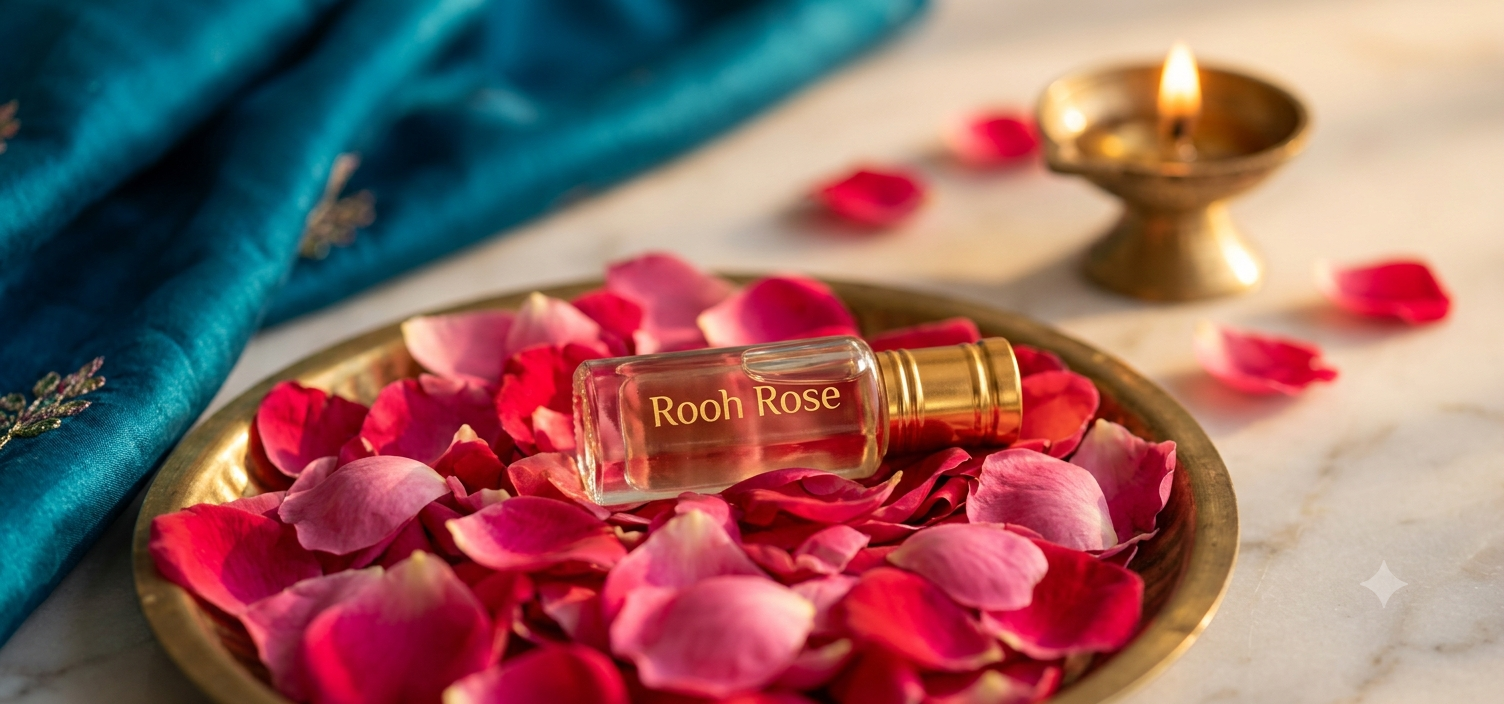
Discover the centuries-old attar-making tradition of Vrindavan and the story behind our alcohol-free Rooh Rose and Rooh Lavender — crafted the way Braj has always known fragrance.
Vrindavan Ki Attar Parampara — The History Behind Rooh Rose & Rooh Lavender
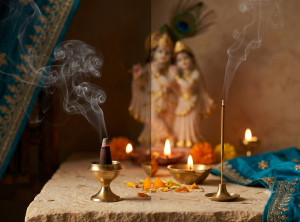
There’s a particular lane near Loi Bazar in Vrindavan where, even today, if you walk past early enough in the morning, you’ll catch a smell that doesn’t belong to any shop sign — it simply hangs in the air. Old attar-makers here still work the way their fathers and grandfathers did, with copper deghs (stills), sandalwood oil as a base, and patience measured in weeks, not minutes. Ask any of them where attar came from, and most won’t talk about France or modern perfumery. They’ll talk about Radha Rani’s shringar, about flowers offered at Thakur ji’s charan, about a tradition that was never separate from bhakti in the first place.
This is the world Rooh Rose and Rooh Lavender come from — not a lab, not a fragrance catalogue, but a parampara (tradition) that has quietly continued in Braj for hundreds of years, largely unnoticed by the modern perfume industry that now sells “attar” as just another word for oil-based scent.
What Attar Actually Means — And Why Vrindavan Matters So Much
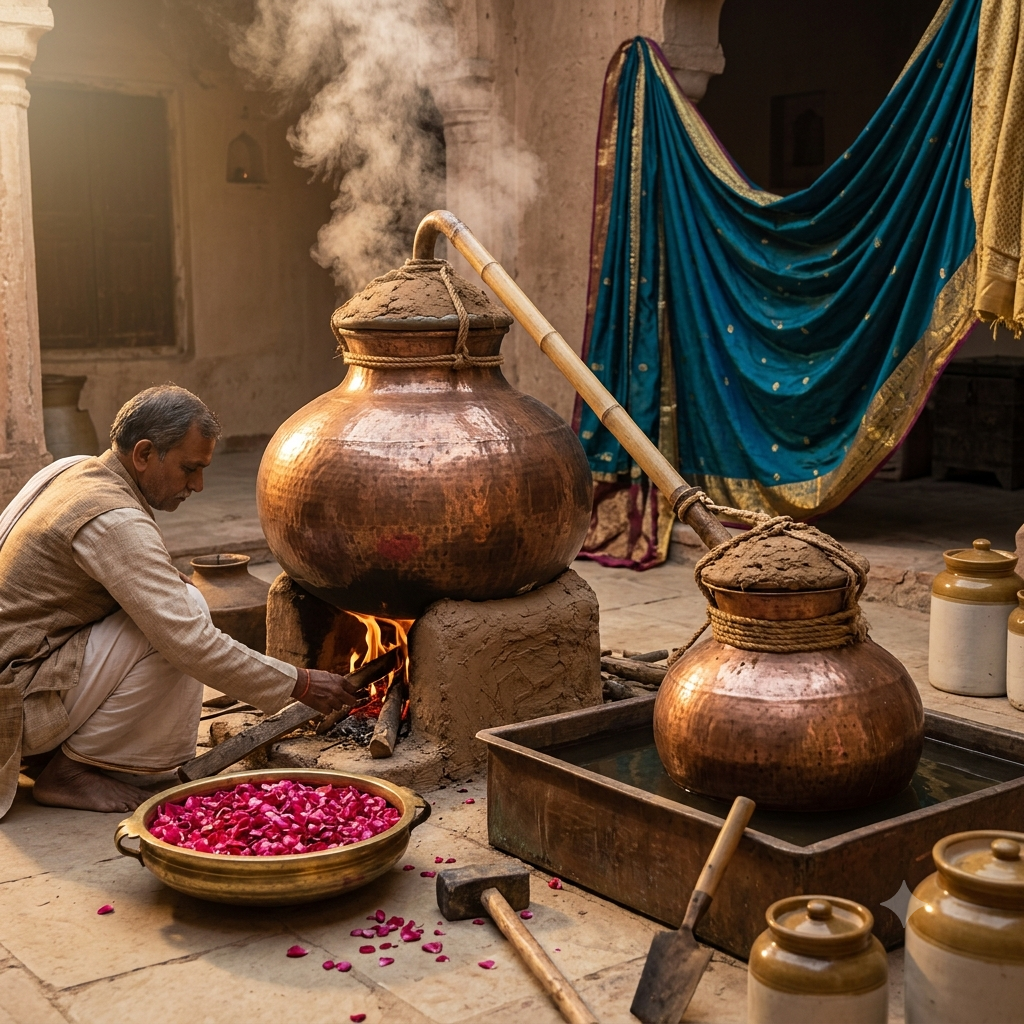
The word attar comes from the Persian/Arabic “itr,” meaning fragrance extracted from natural sources — flowers, wood, herbs, and roots — through a slow steam distillation process, traditionally captured in a sandalwood oil (chandan ka tel) base rather than alcohol. This is an important distinction, because it’s exactly why traditional attar has always been considered suitable for puja and personal wear alike, unlike alcohol-based Western perfumes.
Vrindavan’s place in this tradition isn’t accidental. As one of the most visited pilgrimage towns in India, it has, for centuries, needed a constant, reliable supply of natural fragrance — for temple deities, for shringar of the utsav murtis, for the thousands of devotees who wanted to carry a piece of Braj’s fragrance home with them. Attar-making here grew not as a luxury industry, but as a devotional craft, passed down through families who supplied local temples long before it became a retail product.
Rooh Rose — Following the Gulab Ki Kheti of Braj
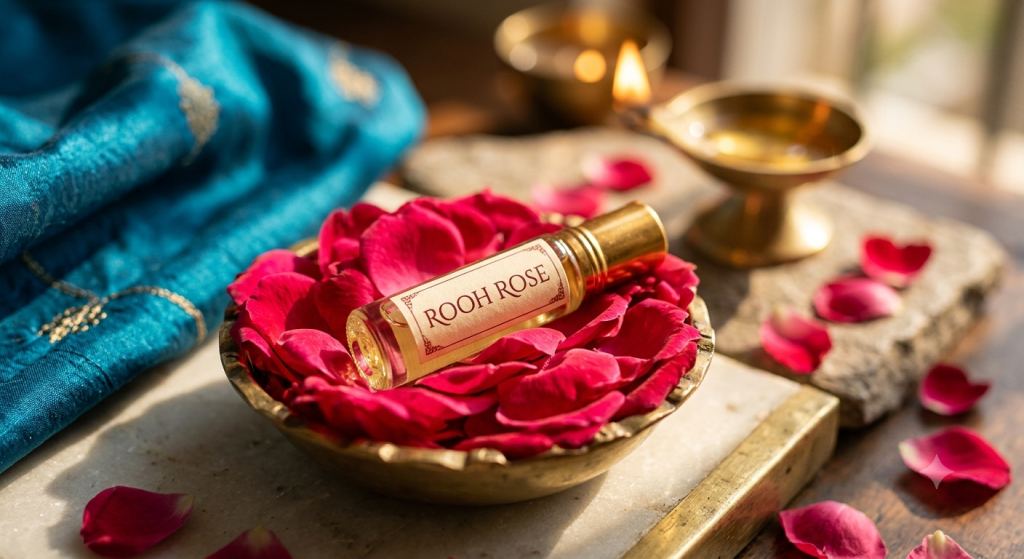
Rooh, in traditional attar-making, refers to the purest extracted essence of a single ingredient — in this case, rose. The rose used in classical Vrindavan attar comes from a specific tradition of gulab ki kheti (rose cultivation) that has historically thrived in parts of North India, particularly around the Braj region and further into Kannauj, often called the attar capital of India.
Making Rooh Rose the traditional way is slow by design. Fresh rose petals are packed into a copper degh with water, sealed, and heated gently over a wood or dung-cake fire. The rose-infused steam travels through a bamboo pipe into a receiving vessel (bhapka) that already contains pure sandalwood oil. Over hours, the rose essence slowly gets absorbed into the sandalwood base — and this process is often repeated across multiple batches of petals to build depth and concentration, sometimes over several days.
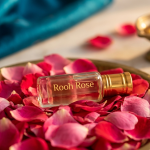
The result is nothing like the sharp, one-note rose smell of synthetic perfumes. Traditional Rooh Rose has a soft, slightly earthy warmth underneath the floral top note — because it’s still carrying the sandalwood it was born into. This is precisely why our Rooh Rose is offered as a natural rose attar roll on — a format that lets you apply it the way it was traditionally worn, directly on pulse points, without any alcohol dulling its character.
Rooh Lavender — A Newer Addition, Rooted in the Same Method
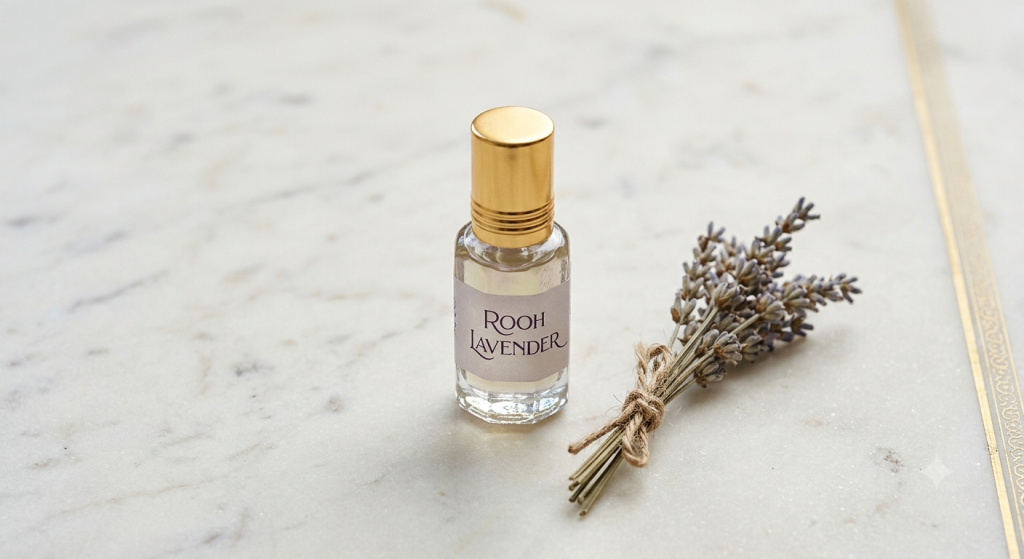
While rose has the longer devotional history in Braj, lavender has become a beloved companion in more recent attar-making — valued for its calming, almost meditative quality, which pairs naturally with the stillness devotees seek during puja and evening aarti. Made using the same sandalwood-based distillation approach, Rooh Lavender carries that same non-alcoholic, skin-friendly character, while offering a cooler, more grounding fragrance profile than rose.
Many of our customers use Rooh Lavender for evening wear or before meditation and japa, finding its calming base helpful for settling the mind — something a synthetic lavender spray, built on alcohol and artificial fixatives, simply can’t replicate.
Why This History Still Matters Today
In a market flooded with mass-produced “attar” that’s often just fragrance oil diluted in synthetic carriers, the traditional method matters more than ever. When you choose a genuinely alcohol-free attar online, you’re not just picking a fragrance — you’re choosing something that:
- Is safe to wear during puja and religious ceremonies, where alcohol-based scents are traditionally avoided
- Sits closer to the skin and lasts longer, since sandalwood oil is a natural fixative
- Deepens in character over time, much like it always has in Vrindavan’s own attar tradition
- Carries a story — of copper stills, rose fields, and generations of craftsmen who never separated fragrance from devotion
Bringing Vrindavan’s Fragrance to Your Home
At Keli Kunj, our Rooh Rose and Rooh Lavender are made honoring this same principle — natural extraction, sandalwood-rooted base, and zero alcohol. Whether you’re using it for daily shringar of your ghar ke Thakur ji, or simply want a fragrance that carries a little of Braj’s stillness with you through the day, these attars are made the way Vrindavan has always understood fragrance — slow, natural, and deeply personal.
Explore our Attar & Perfume collection and bring home a fragrance with roots as old as Vrindavan itself.
Radhe Radhe.
Attar is made through natural steam distillation of flowers, wood, or herbs into a sandalwood oil base, with no alcohol involved. Regular perfume typically uses alcohol as a carrier along with synthetic fragrance compounds, which makes it unsuitable for puja and often harsher on skin over time.
Sandalwood oil acts as a natural fixative, meaning it holds fragrance close to the skin and helps it last longer without evaporating quickly like alcohol does. It also carries its own warm, grounding scent that blends beautifully with rose, lavender, and other traditional attar ingredients.
Yes. Since Rooh Rose is completely alcohol-free, it’s traditionally appropriate for offering to the deity, shringar of the murti, and personal wear during puja — unlike alcohol-based perfumes, which are generally avoided in ritual contexts.
Because of the sandalwood oil base, natural attar like Rooh Rose typically lasts 6–8 hours on skin, often longer, and tends to soften into a warmer, muskier note as the day goes on — rather than fading out completely like alcohol-based scents.
Many devotees use Rooh Lavender specifically before meditation, japa, or evening aarti, as its calming profile is believed to support a quieter, more focused state of mind. It’s a fragrance and a small ritual aid at once.
Kannauj is widely known as India’s attar capital, but Vrindavan has its own long-standing, lesser-known attar tradition — one that developed specifically to serve temple and devotional needs rather than the broader retail perfume market, which is what makes it distinct.